
Is the Pretoria Peace Deal Torn Apart? What Led Ethiopia and Tigray Back to War?
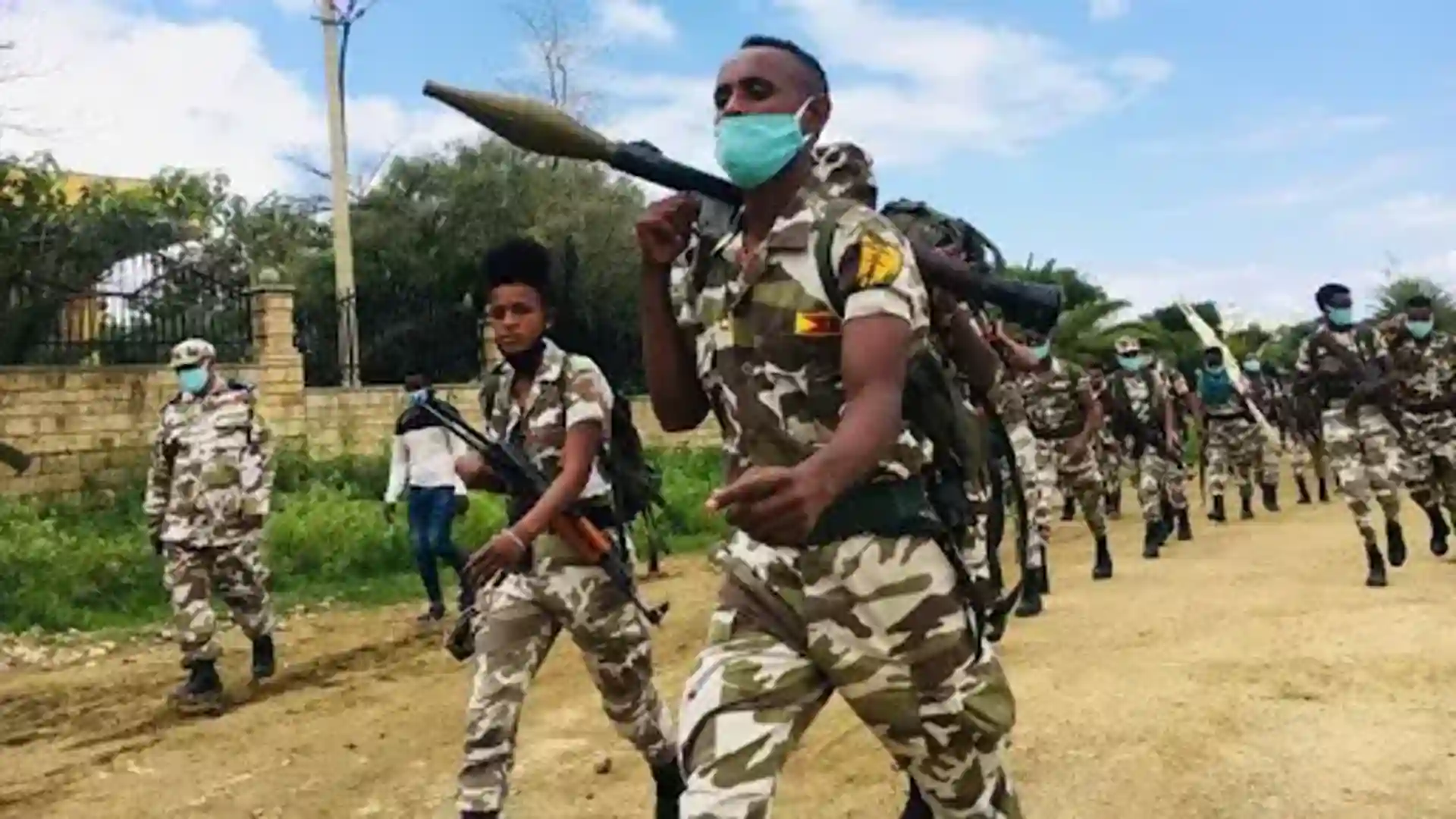
Fighting broke out early this morning in Western Tigray, in an area called "Shererina". The Tigray regional government says the Ethiopian federal government launched the attack . A senior TPLF official told AFP that combat was still going on and that it involved heavy artillery.
It's too early to say whether this is the start of a full war or a limited strike meant to send a message and see how the other side reacts. But after months of warnings from both camps that war was coming, it has, in some form, arrived. The rest of this piece lays out how Ethiopia and Tigray got here, and why the peace deal that was supposed to prevent this fell apart so completely.
A) Background: How Tigray Got Here
The war (2020 to 2022)
Fighting broke out in November 2020 between Ethiopia's federal government under Prime Minister Abiy Ahmed and the Tigray People's Liberation Front (TPLF), the party that had dominated Ethiopian politics for nearly three decades before Abiy came to power in 2018. The immediate trigger was a TPLF attack on a federal military base in Tigray, in what it called a "pre-emptive strike."
The war that followed became one of the deadliest conflicts of the 21st century. Estimates of the dead range into the hundreds of thousands, counting direct casualties, mass atrocities, and a famine largely attributed to a blockade of the region. Eritrea, under President Isaias Afwerki, a longtime enemy of the TPLF, entered the war on the federal government's side, and its troops were implicated in some of the conflict's worst atrocities. Amhara regional forces also fought alongside federal troops, with their own territorial claims to parts of western Tigray.
The Pretoria Agreement (November 2022)
After two years of war, talks brokered by the African Union, with the U.S. and others pushing from the sidelines, produced the Cessation of Hostilities Agreement, signed in Pretoria, South Africa, in November 2022. Its core commitments included:
Permanent cessation of hostilities between federal forces and the TPLF
Disarmament of TPLF combatants, folding some into federal or regional security structures
Withdrawal of foreign and non-ENDF forces, meaning Eritrean troops and Amhara regional militias, from Tigray
Restoration of federal authority over Tigray, including reinstating constitutional order and services such as power, banking, telecoms, and humanitarian access
An interim regional administration for Tigray, to govern until elections could be held
Restoration of Tigray's pre-war territory, including Western Tigray, through constitutional means rather than by force
Accountability and transitional justice for wartime atrocities
The agreement's biggest problem, in hindsight, was that it had no real way to make either side follow through on any of this. Article 11 set up a monitoring team, but its only real power was to tell a violating party to stop and, if that didn't work within 24 hours, call a meeting to try to resolve the problem. There was no suspension clause, no referral to the UN Security Council or the African Union's Peace and Security Council, and no penalty for breaking the deal. That gap is a big part of why the agreement kept getting violated by both sides: Western Tigray staying under federal and Amhara-aligned rule, and the TPLF drifting toward outside forces like Eritrea and Fano.
What was supposed to happen next?
An interim administration, initially led by Getachew Reda and later Tadesse Werede, was appointed with federal backing to run Tigray until elections. What should have followed was straightforward. The pre-war territory of Tigray was to be restored to the interim administration, so displaced people could safely return home and live with lasting security. The TDF were meant to disarm in phases as non-ENDF forces fully withdrew from Tigray, with the ENDF's role limited to guarding Ethiopia's international borders, not occupying Tigrayan land alongside Amhara militias, which is against the country's constitution. None of this went smoothly. Eritrean forces never fully withdrew, Western Tigray stayed under federal and Amhara-aligned administration, disarmament stalled, and the interim government's standing weakened from within the TPLF itself.
The Interim Administration Unravels
Stage one: Getachew Reda's departure (March 2025). The interim administration's job, on paper, was to focus on urgent needs: helping displaced people return home, delivering humanitarian aid, and rebuilding basic services. Instead, when Getachew Reda's administration took office in 2023, it moved to dismantle the TPLF's party network at the district and zonal level, the local structures the old guard had used to run Tigray for three decades. TPLF supporters accused Getachew of taking on a "homework assignment" from Abiy Ahmed to engineer political change in Tigray, rather than doing the job he was actually appointed for. To the old guard, it looked like a deliberate effort to push them out of power.
By early 2025, the TPLF old guard began forcibly taking over government offices across Tigray in response. Getachew's safety was now at risk, so Prime Minister Abiy Ahmed called him to Addis Ababa, according to Getachew's own account in various interviews, and Getachew left Tigray in March 2025.
Stage two: Tadesse Werede's ouster (April to May 2026). The dispute that triggered the current crisis began on 8 April 2026, when the federal government unilaterally extended Tadesse Werede's mandate for another year, rather than allowing a transition the TPLF old guard had expected. In response, the TPLF's old guard, led by Debretsion Gebremichael, moved over several days culminating on 5 May 2026 to reclaim regional power by force, dissolving Tadesse Werede's administration and reinstating what it called the National Regional Government of Tigray, with Debretsion as regional president.
B) What Each Side Wants
The federal government under Abiy Ahmed has pursued a consistent, publicly stated goal of reducing the TPLF's relevance in national politics. Abiy has said so directly, in interviews and in parliament, framing it as generational change, that Tigray's old guard should "trust the youth" and step aside.
The TPLF old guard, for its part, has shown no willingness to cede power on those terms. After Ethiopia's electoral board declared it an illegal party, the TPLF turned outward, toward Eritrea and Sudan, for alliances, a move that has further angered the federal government and raises the stakes for the wider Horn of Africa. Eritrea in particular has its own long-standing interest in this dynamic. Preventing a TPLF resurgence has been a strategic priority for Asmara since the 2020 to 2022 war, giving Eritrea reason to stay invested in outcomes inside Tigray regardless of what Addis Ababa prefers.
C) Recommendations
To the Federal Government
Reverse the TPLF's illegal-party status and allow it to compete politically. Abiy Ahmed's stated goal, sidelining the TPLF in favor of a new generation of Tigrayan leadership, is constitutionally illegal, and pursuing it by declaring the party illegal has produced the opposite of the intended effect. It has pushed the TPLF toward external alliances with Eritrea and Sudan rather than toward retirement from politics. A TPLF competing for votes is far less dangerous to Ethiopia's stability than a TPLF that has concluded politics is closed to it.
Resolve the issue of Western Tigray by constitutional order. Withdraw federal forces from the area and allow displaced people to come back home. Western Tigray was not the cause of the 2020 war, but since then it looks like the federal government has used it as a bargaining chip to keep the balance of power.
Stop sanctioning the region by cutting off its share of the national budget, fuel, medicine, and other essentials.
To the TPLF Leadership
Cut ties with all external forces and operate strictly within the constitutional order. It's worth being honest about why the TPLF turned to Eritrea and Sudan in the first place. This wasn't a first resort. The federal government declared the party illegal, then blockaded the region from outside, withholding its share of the federal budget and controlling essentials like oil and medicine. That squeeze made ordinary life in Tigray increasingly unbearable and left the TPLF feeling it had no real leverage left to force Addis Ababa back to the table. Seeking outside alliances was, from the TPLF's side, a way to pressure the federal government into negotiating rather than simply waiting it out. That context matters, but it doesn't change the outcome: whatever short-term leverage the TPLF believes it gains from alignment with Eritrea, Sudan, or any other outside actor comes at the cost of the party's core claim to be a legitimate domestic political force rather than a faction sustained by foreign patrons. The TPLF's path back to political relevance runs through the Ethiopian constitution and its institutions, through elections, the House of Representatives, and the courts, not through alliances with states that have their own reasons to keep Tigray unstable.
To Regional and International Actors (AU, US, Eritrea, Sudan)
The African Union and the Pretoria guarantors should consult the parties on amending the agreement. The near-total absence of an enforcement mechanism has let both sides quietly violate its terms, from Western Tigray's non-return to the alleged federal funding of armed groups to the TPLF's forcible takeover, without consequence. A monitoring mechanism with actual teeth, not just periodic statements, is overdue.
Eritrea should be pressed, through whatever diplomatic channels remain open, to stop meddling in Ethiopia and Tigray's political affairs. Eritrea has its own reasons to want a say in Tigray's outcome. It has no interest in a stable, internally legitimate Tigray, which makes its involvement structurally destabilizing regardless of intent.
Conclusion
For months, the honest answer to "is war coming back" was that it depended on a handful of decisions nobody seemed willing to make. As of this morning, that question has been overtaken by events. Fighting in Shererina may still turn out to be a limited strike rather than the opening move of a new full-scale war, but the fact that it happened at all confirms what both sides had been signaling for weeks: neither one was still treating Pretoria as binding.
What happens over the next few days will say a lot about where this goes. Whether the fighting stays contained to Shererina or spreads to other fronts, whether it draws in drones and airstrikes, and whether either side moves toward broader mobilization will determine if this becomes a second full war or stays a sharp, contained escalation that cooler heads manage to walk back.
If there's one lesson this moment should force onto the record, it's this: an agreement with no way to enforce it is barely an agreement at all. Pretoria asked both sides to keep their word, but built nothing that would actually make them. No penalty for violating it, no automatic referral to a body with real power, nothing beyond a committee meeting to talk it over. That's not a peace deal with teeth, it's a peace deal on the honor system, and honor systems don't hold when both sides have every incentive to cheat. Whatever comes out of this crisis, any future agreement between Ethiopia and Tigray needs a real forcing mechanism built in from the start, not bolted on after the fact once it's already too late.
This is a perspective piece. The views expressed are the author's own and do not necessarily reflect the position of Horn Reporter.